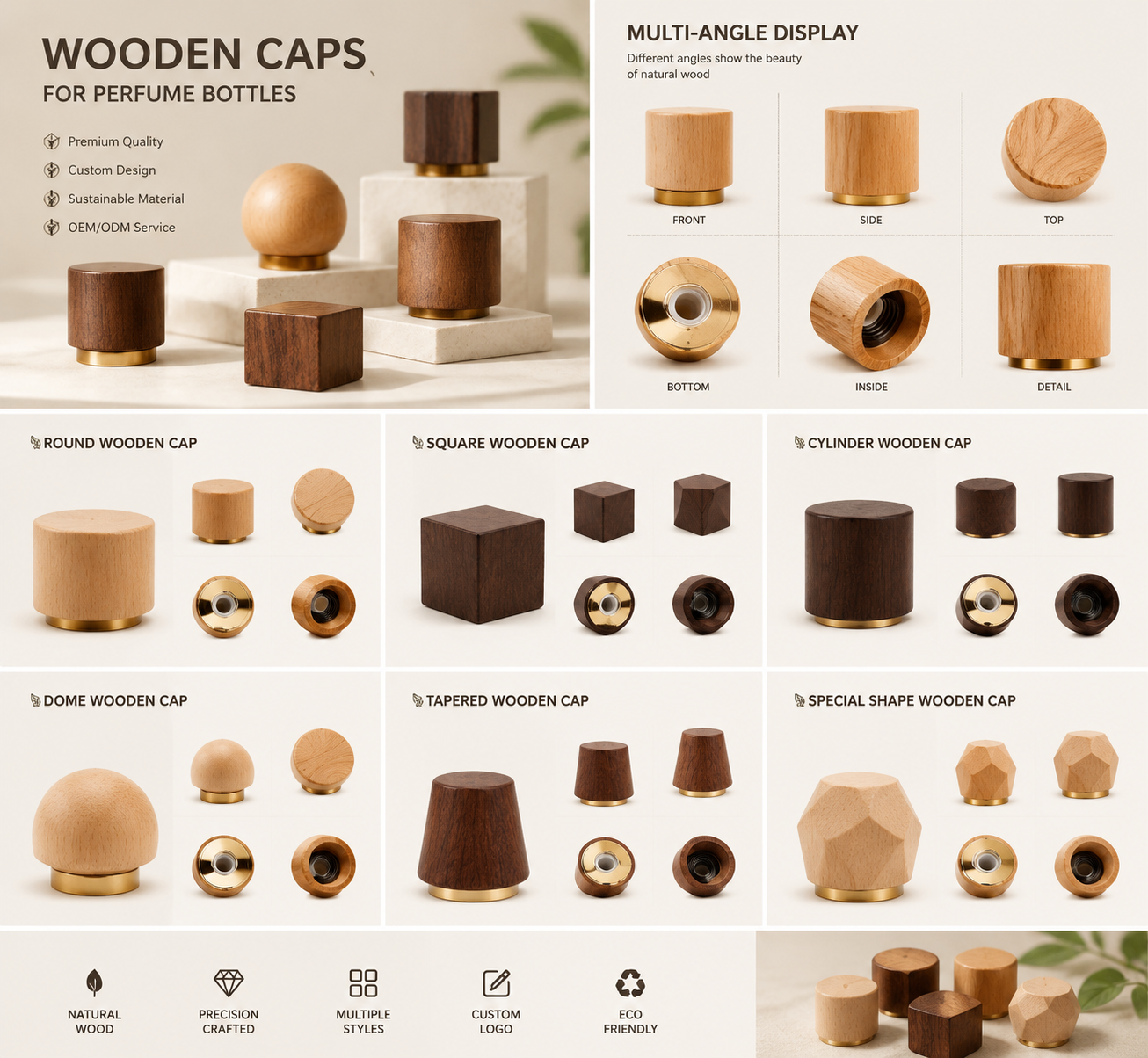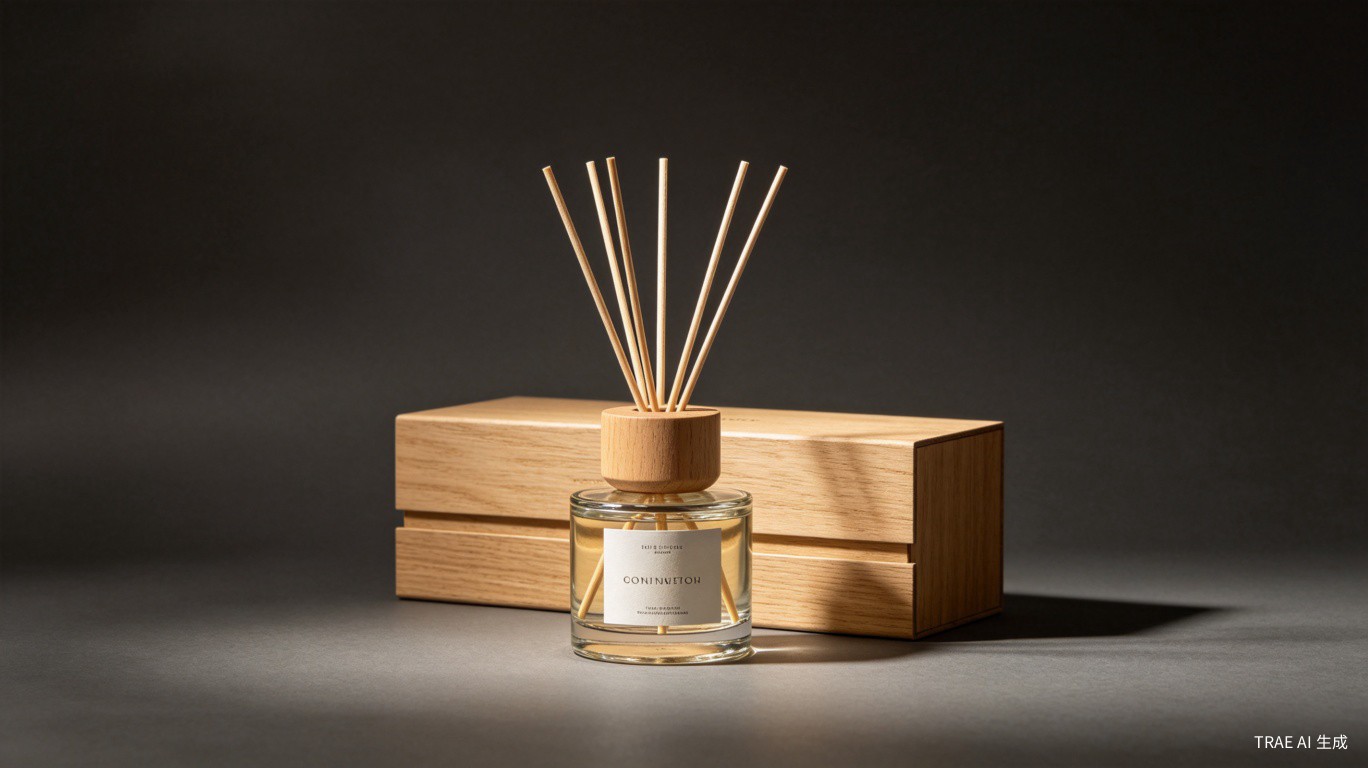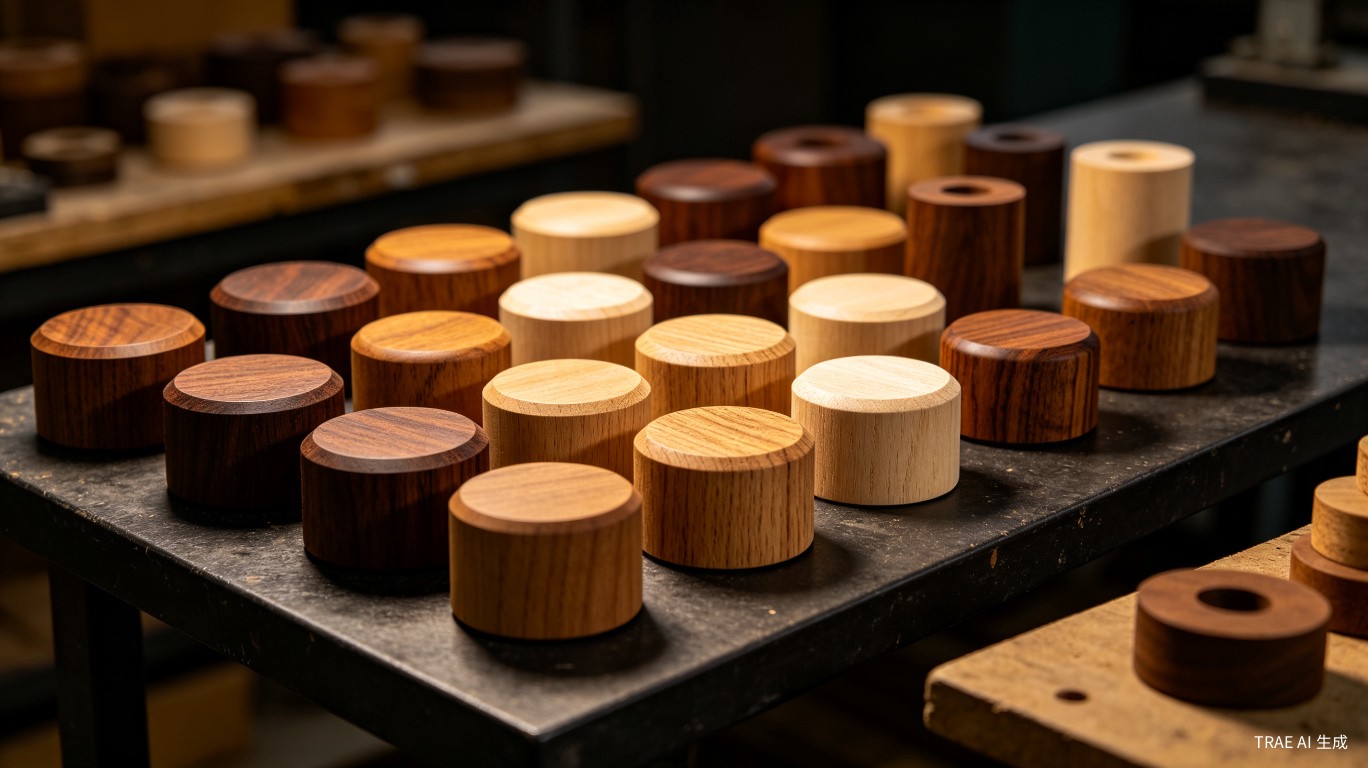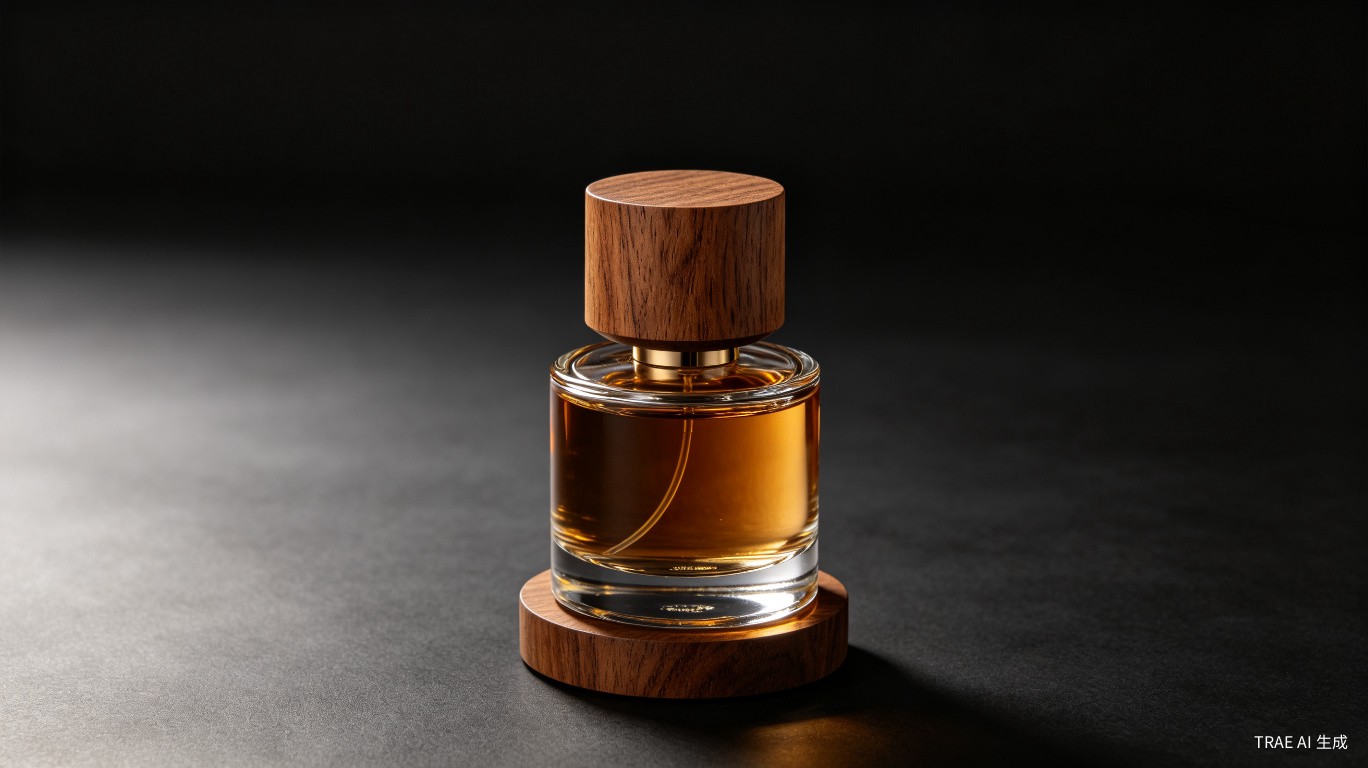
The perfume cap is the first tactile touchpoint for consumers, and material choice directly conveys brand positioning. Wooden caps, with their warm hand-feel, natural grain, and sustainable attributes, have become the top choice for high-end fragrance brands. This article compares the applicability of three mainstream woods across physical properties, visual effects, and cost structure.
1. Walnut: The Classic & Steady Choice
Walnut has medium density (0.65-0.70 g/cm³), moderate hardness, and is easy to CNC turn and finely polish. Its heartwood ranges from dark brown to chocolate, with straight and fine grain that achieves excellent luster after polishing.
Suitable brands: Mature, steady-positioned oriental and woody fragrance brands, such as some product lines from Tom Ford and Le Labo.
Craft tip: Walnut contains natural oils. For surface treatment, we recommend penetrating wood wax oil rather than closed paint, to preserve the wood's breathability and natural sheen.
2. Rosewood: The Representative of Luxurious Grain
Rosewood has higher density (0.85-1.05 g/cm³), greater hardness, and displays beautiful tiger-stripe or landscape grain patterns. Its color ranges from yellow-brown to purplish-red, with each piece of wood having a unique grain.
Suitable brands: Limited editions, collector's perfumes, or niche brands emphasizing uniqueness. The irreproducibility of the grain itself is a manifestation of scarcity value.
Note: Rosewood is a CITES-regulated species, and exports require proof of legal origin. We recommend requesting FSC or CITES documentation from suppliers during procurement.
3. Ebony: The Ultimate Luxury Symbol
Ebony has extremely high density (1.0-1.3 g/cm³), is hard and heavy, with heartwood that is pure black or black-brown interspersed. After polishing, it can achieve a mirror-like gloss, making it the top-tier material for wooden caps.
Suitable brands: Ultra-luxury perfume lines, or brands targeting Middle Eastern and Asian markets that prefer dark packaging. The weight of ebony itself also enhances the handheld experience.
Cost note: Ebony raw material costs 8-12 times that of walnut, with high processing loss rates (approx. 30%). It is suitable for small-batch high-end customization and not recommended for mass-market product lines.
4. Material Selection Decision Matrix
| Dimension | Walnut | Rosewood | Ebony |
|---|---|---|---|
| Unit price (relative) | 1.0x | 3.5x | 10x |
| Processing difficulty | Low | Medium | High |
| Grain uniqueness | Medium | High | Very high |
| Eco certification | FSC readily available | CITES required | CITES required |
5. Summary & Recommendations
For mid-to-high-end fragrance brands with annual procurement volumes of 5,000-50,000 units, walnut is the most cost-effective solution — mature processing, stable supply, and simple certification. If the brand is positioned in niche luxury with production controlled within 3,000 units, rosewood or ebony can significantly enhance product premium and social media shareability.
TUOCHEN supports OEM/ODM customization for all three woods, with an MOQ of 500 units and FSC certification support. For sample comparisons, please submit your request via the form below.